Built strip by strip, not popped from a mould
Ferry & Wren is a two-person workshop building wooden kayaks to order — each hull shaped from cedar strips, glass and epoxy over about four months.
Demonstration site — workshop, figures and dates are example content.
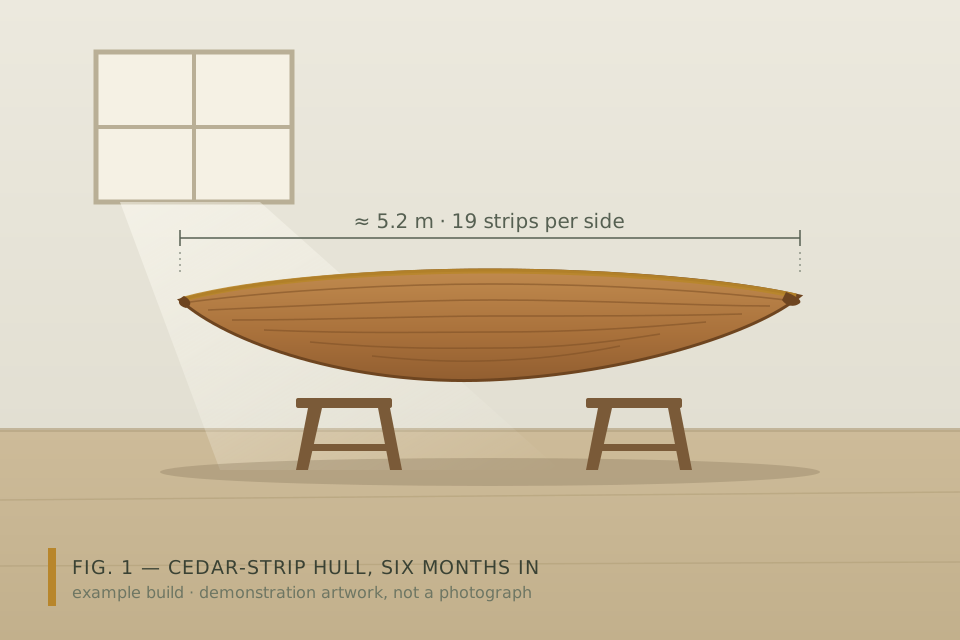
Six stages, about four months, two pairs of hands
A strip-built hull is a cedar core inside glass and epoxy — light for its size and far tougher than it looks. This is the order every boat moves through the shop.
- 01
Strongback and mould stations
The hull’s shape is set out as plywood sections on a spine — the jig every plank will follow.
EXAMPLE — DAYS 1–4 - 02
Strip planking
Nineteen cedar strips per side, bead-and-cove edge glued — the slow stage, and the one the wood is chosen for.
EXAMPLE — WEEKS 2–6 - 03
Fairing
Scraped and sanded to a fair curve; this is where the hull stops looking like a kit.
EXAMPLE — WEEK 7 - 04
Glass and epoxy
A woven glass skin inside and out, wet out in epoxy — the composite that makes thin cedar strong.
EXAMPLE — WEEKS 8–10 - 05
Cockpit, stems and trim
Coaming, hatches and end-pours fitted; the boat becomes a boat you can sit in.
EXAMPLE — WEEKS 11–13 - 06
Varnish and outfitting
UV varnish over the epoxy, seat and deck lines fitted, hull weighed and signed.
EXAMPLE — WEEKS 14–16
The strips do the work; the species set the tone
Four woods show up in most builds. Density figures are typical published values — every board still gets weighed at the bench.
| Species | Where it goes | Density, kg/m³ | Why it’s chosen |
|---|---|---|---|
| Western red cedar | Hull strips | ≈ 340 | Bends fair, glues clean, light for its size |
| Paulownia | Feature strips | ≈ 280 | Pale contrast lines; the lightest strip wood in the shop |
| Sitka spruce | Deck beams, coaming | ≈ 420 | Stiff for its weight where the hull takes load |
| Ash | Stems, rub rails | ≈ 680 | Hardwearing where the boat meets slipways and knocks |
Figures are example values for this demonstration page.
One example boat, measured
Every commission is different; this is the specification of the build shown in the poster.
| Measure | Value | Note |
|---|---|---|
| Length | 5.2 m | Sea kayak format |
| Beam | 0.58 m | At the waterline |
| Hull depth | 0.32 m | Sheer to keel, midship |
| Finished weight | ≈ 19 kg | Weighed at the bench, example build |
| Strips per side | 19 | Cedar, bead-and-cove |
| Skin | — | Woven glass inside and out, epoxy |
| Build time | ≈ 4 months | Two builders, one boat at a time |
Example figures for the demonstration build, not a quote.
Come and see the next hull before it’s yours
Visits run about 45 minutes, while the shop is working. You’ll see the current boat mid-stage — the best moment to understand what the wait buys.
- Walk the current build at whatever stage it’s in — dust and all
- Pick up a sample hull section and feel the strip, glass and core
- Talk through your own boat: length, load, the water you paddle
- Free, roughly 45 minutes, one visitor or two at a time
Opens your mail app — the address is a demonstration one. No form data is collected or sent by this page.